Curious why so many homes in Pelham feel distinct from one block to the next? In 10803, architecture is part of the story buyers and sellers notice right away, from late-19th-century Shingle Style houses to Tudor Revival facades and formal Colonial-inspired homes. If you are thinking about buying, selling, or simply understanding what gives Pelham its character, this guide will help you recognize the styles that shape the village and why they still matter today. Let’s dive in.
Why Pelham architecture stands out
Pelham has a built-in sense of place that is hard to miss. The Town of Pelham identifies itself as the oldest town in Westchester County, and the village describes Pelham as New York City’s first true bedroom community because of rail travel.
That history still shows up in the streetscape. Pelham Village is only 0.8 square miles, and Pelham Village plus Pelham Manor total a little over 2 square miles, so the architectural character feels concentrated rather than scattered.
The Village of Pelham is also largely built out, according to its Comprehensive Plan. That matters because when a community is mostly developed and uses design review for exterior changes, scale, rooflines, and materials tend to remain more consistent over time.
Signature home styles in Pelham
Pelham is not a one-style town. Instead, it offers a layered mix of late Victorian, Tudor, Colonial-inspired, apartment, and mid-century buildings that reflect different phases of suburban growth.
Shingle Style and Victorian homes
Pelham Heights is one of the clearest places to see Pelham’s earlier residential history. It was laid out in 1889 as a woodland-park neighborhood with large, unpainted Shingle Style homes.
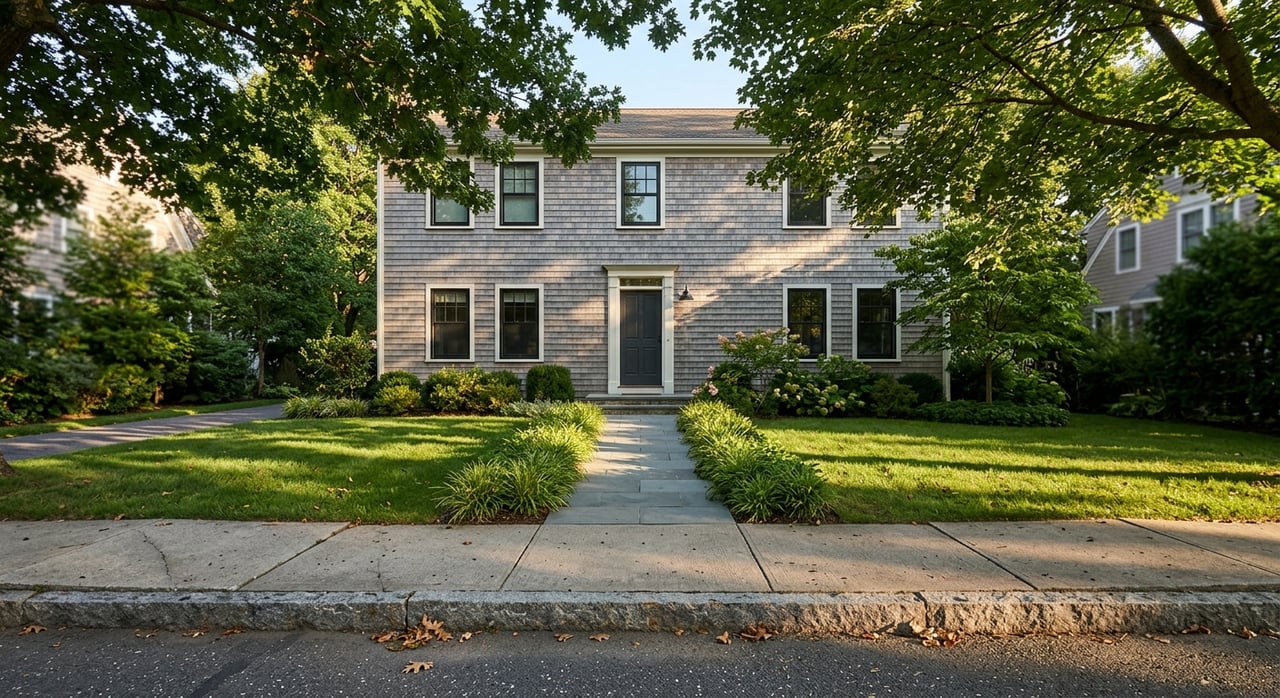
Shingle Style is known for simple massing, irregular forms, and a lack of strict symmetry. In this style, the wood shingle itself acts as ornament, creating a more unified and less fussy look than many earlier Victorian houses.
A local example is 203 Corlies Avenue, a 1895 Victorian home noted by the Town Historian as one of 25 Pelham Heights houses built before 1900. Homes like this help illustrate how Pelham developed as an early commuter suburb with architecture designed to feel rooted in a landscaped setting.
Tudor Revival homes
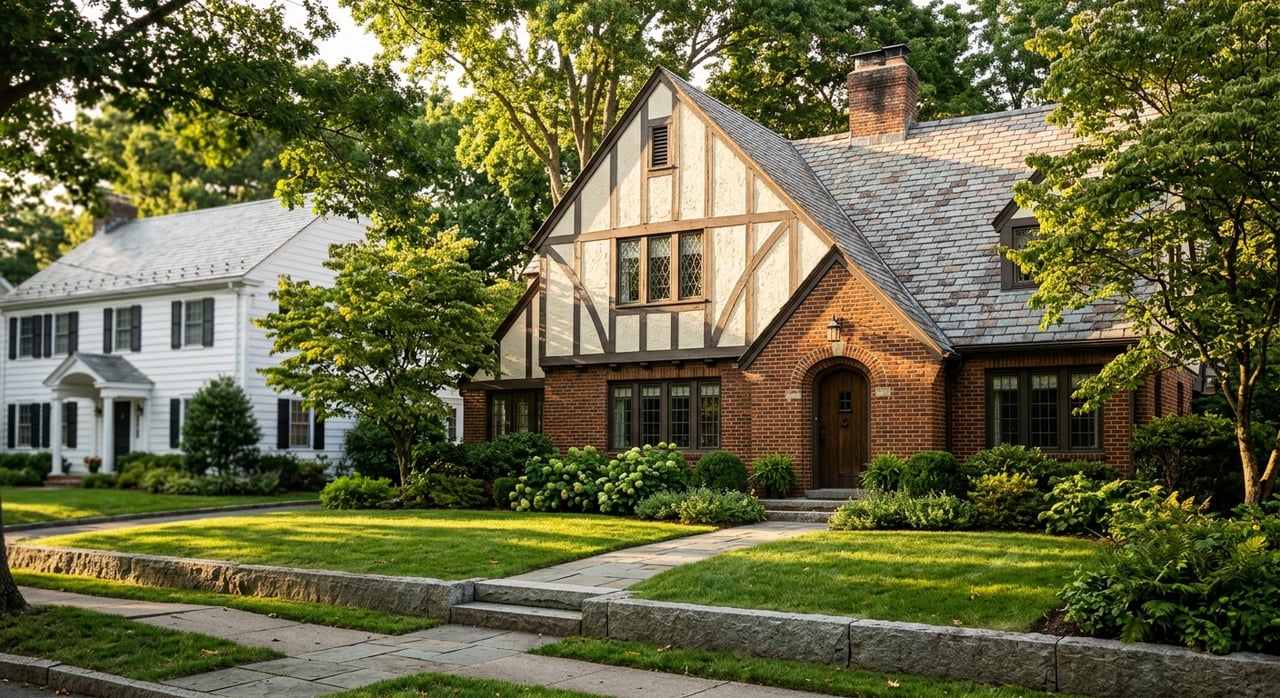
If one style feels especially tied to Pelham, it is Tudor Revival. Local examples such as 1357 Park Lane and 1424 Park Lane show the features many buyers instantly recognize.
You will often see asymmetrical facades, stucco with half-timbering, slate roofs, prominent chimneys, and casement or leaded windows. These details create the storybook look that many people associate with early-20th-century suburban architecture.
Pelham also has Tudor Revival in multi-family form. The Pelham Arms apartment building, built in 1925, uses brick, limestone bands, stucco, half-timbered gables, and original interior millwork to carry that same design language into a larger building.
Colonial Revival, Georgian Revival, and Classical Revival
Not every notable Pelham home leans picturesque or irregular. Some of the area’s most striking houses are more formal, symmetrical, and restrained.
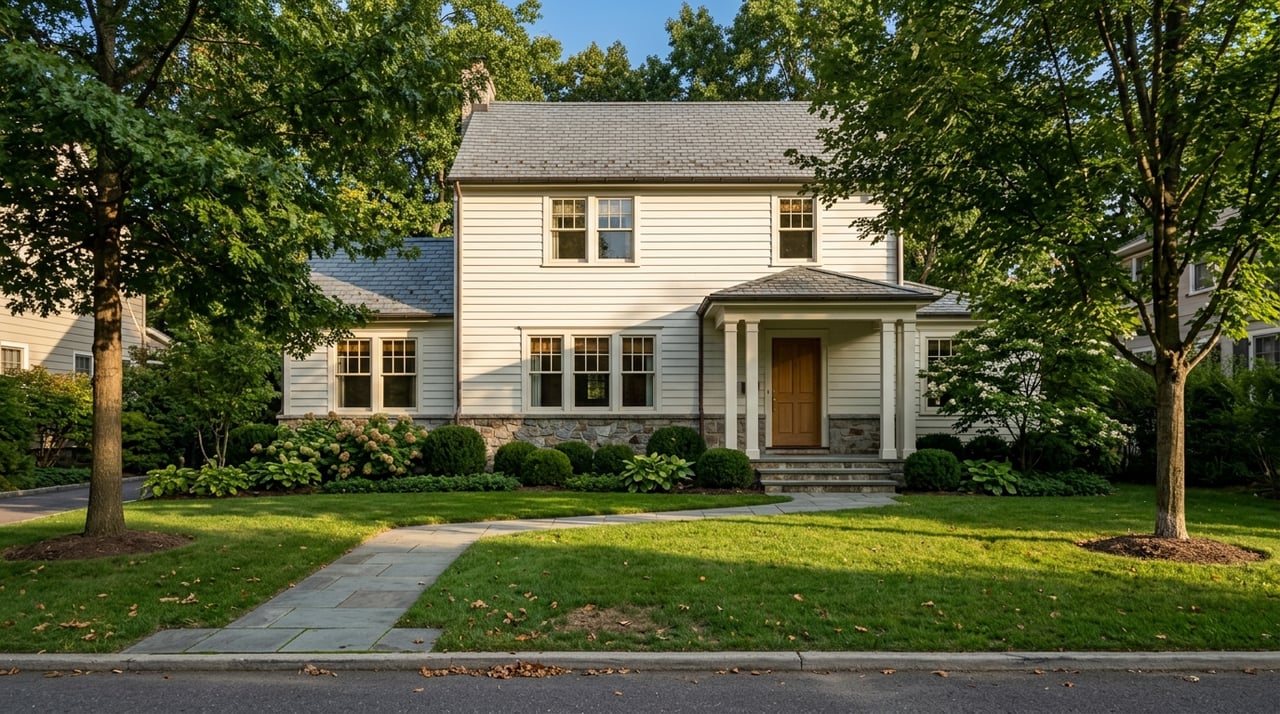
Colonial Revival architecture is broadly associated with balanced facades, front porches, columns, fanlights, side lights, and Palladian windows. In Pelham, the 1920 Georgian Revival house at 530 Monterey Avenue and the 1905 Classical Revival house at 1040 Esplanade are examples of this more ordered architectural approach.
These homes often feel different from nearby Tudors because the emphasis is on symmetry and classical detailing rather than texture and asymmetry. For buyers, that difference can shape both curb appeal and how a home presents in the market.
Prewar apartments and commercial buildings
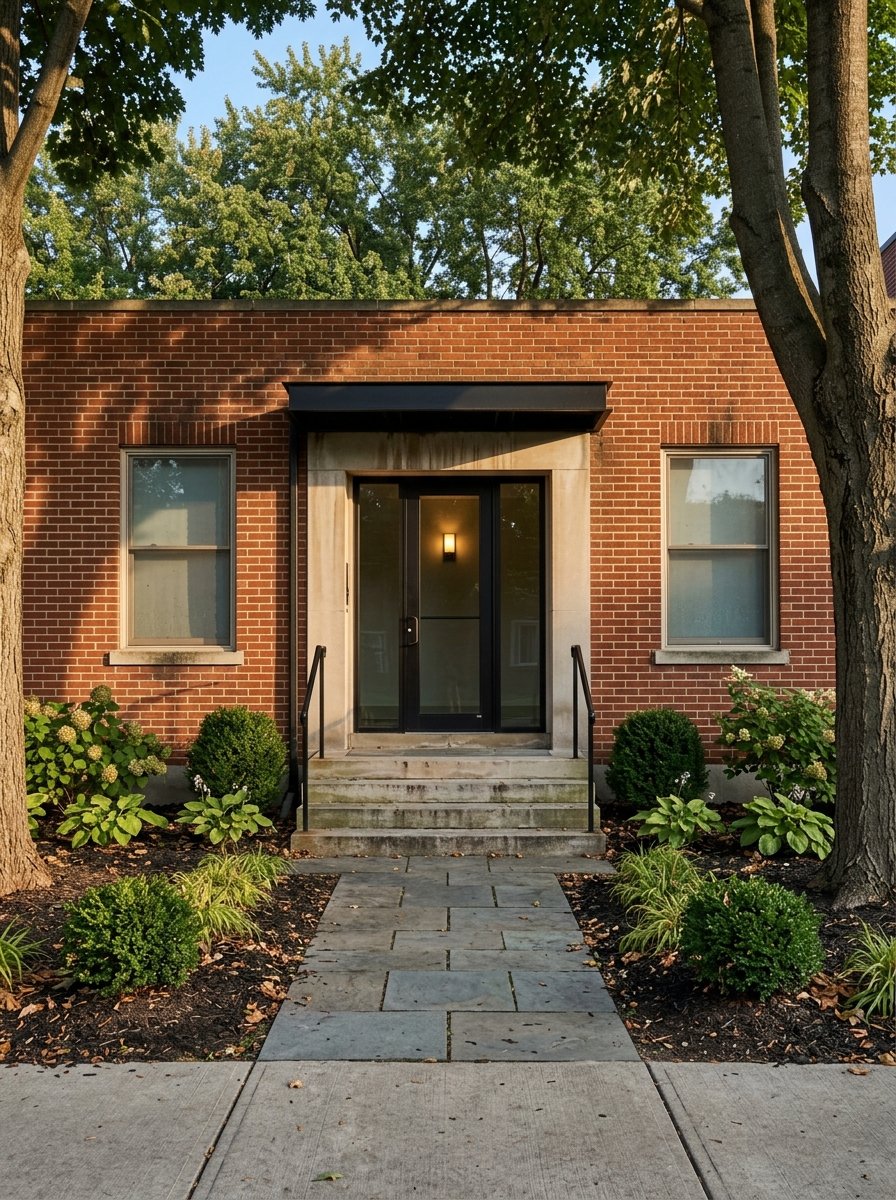
Pelham is mostly known for houses, but prewar apartment buildings are also part of the local architectural fabric. These buildings tend to cluster near the train and retail core rather than on quieter residential side streets.
The Village Comprehensive Plan notes that the Central Commercial District includes several larger apartment buildings. The Town Historian also highlights buildings such as Pelham Arms and the Pelham-Biltmore on Boston Post Road as part of that prewar layer.
These structures add an important piece to Pelham’s story. They reflect the village’s commuter roots and show how architecture around the station and shopping streets developed differently from the single-family neighborhoods.
Italian Renaissance, Spanish Colonial, and mid-century modern
Pelham’s architecture goes beyond the styles most people expect. The Town Historian points to 20 Benedict Place as an Italian Renaissance Revival house and 244 Pelhamdale Avenue as a Spanish Colonial Revival house.
There is also a mid-century modern commercial strip across from Four Corners dating to 1951. It stands as a clear counterpoint to the earlier Tudor shopping center nearby and shows that Pelham’s built environment continued to evolve well into the 20th century.
Best areas for an architectural walk
If you want to understand Pelham through its buildings, a few areas offer especially helpful contrast.
Pelham Heights
Pelham Heights is a strong starting point if you want to see Pelham’s late-19th-century suburban roots. Because it was laid out in 1889, it captures an earlier phase of development than many nearby areas.
This is where you can spot surviving Shingle Style and Victorian-era homes in a setting that was originally planned as a woodland neighborhood. The result is a streetscape that still feels tied to its first design vision.
Pelhamwood
Pelhamwood developed in 1909 north of the station and east of Fifth Avenue. It is especially useful if you want to see how a commuter neighborhood can contain a wide mix of styles while still feeling cohesive.
The Town Historian describes Pelhamwood as eclectic, with many homes featuring Ludowici terra cotta tile roofs. For buyers, that variety can be appealing because it offers architectural character without a single repetitive look.
Pelham Gardens
Pelham Gardens in Pelham Manor offers a different pattern. The area is known for modest English cottage forms, individually designed houses, a service lane, and a mews-like feel.
According to the Town Historian, no two houses were alike. That kind of variation gives the neighborhood a highly individual character that can be especially appealing to buyers who want something less standardized.
Downtown Wolfs Lane and Fifth Avenue
Downtown Pelham adds another layer to the architectural mix. The Comprehensive Plan says this area is mostly one- and two-story, with many Tudor Revival buildings featuring decorative half-timbered facades.
Newer buildings in the district often continue the visual language with shingled or clapboard-style facades and pitched roofs. This is also where the historic Pelham Picture House sits on Wolfs Lane, and it was listed on the National Register of Historic Places in 2010.
Pelham Manor Four Corners
Four Corners, at Boston Post Road and Pelhamdale Avenue, combines several building types in one area. You can see early-20th-century retail, apartments, a neo-Gothic church, and nearby parkland in close proximity.
The area also includes the Tudor Revival shopping center at 4662-4676 Boston Post Road, described by the Town Historian as one of the earliest free-standing shopping centers, along with the Pelham Arms apartment building. For anyone interested in how architecture shapes everyday village life, this is a revealing stop.
Why style matters when buying or selling
Architectural style is not just about appearance. It can also affect how a home is perceived, maintained, and valued.
The Appraisal Institute notes that style is part of how appraisers judge whether building elements contribute to or detract from value. That is one reason original roof materials, windows, masonry, and millwork can matter so much.
For buyers in Pelham, that often means looking past square footage alone. You may also weigh how much original character remains, whether the layout supports modern living, and what level of upkeep may be needed.
For sellers, presentation matters in a specific way with older homes. A house with preserved period detail, thoughtful updates, and a clear maintenance history often tells a stronger story than one that has lost too much of its original identity.
What to look for in a historic Pelham home
If you are considering a historic or architecturally distinctive property in Pelham, it helps to look at the home as both a design object and a living space.
A few features deserve close attention:
- Original windows, doors, and trim
- Roof materials such as slate or terra cotta tile
- Masonry condition on chimneys and exterior walls
- Signs of updated wiring, plumbing, and insulation
- How additions or renovations fit the original style
- Records of repairs, upgrades, and routine maintenance
The National Association of Realtors notes that historic homes may have older wiring, plumbing, insulation, and foundations, and they can carry higher repair costs. The same source also notes that keeping detailed records of updates and repairs is helpful for resale.
In Pelham, those details matter even more because the village places a strong emphasis on maintaining community character. The Village of Pelham has an Architectural Review Board for exterior review, which means changes to visible exterior features may involve another layer of consideration.
How Pelham’s character supports long-term appeal
One reason Pelham continues to attract attention is that its architecture feels intentional rather than accidental. The village’s planning framework reinforces that by supporting design standards and protecting the scale and material character that make the area recognizable.
For buyers, that can translate into a stronger sense of continuity from block to block. For sellers, it can help position a home within a market where architectural identity is part of what makes a listing memorable.
Whether you are drawn to a shingled late-Victorian house, a Tudor with leaded windows, or a more formal Colonial-inspired home, Pelham offers a rare mix of architectural depth in a compact village setting. If you are thinking about buying or selling a distinctive home in Pelham, Martha Rubio can help you evaluate character, presentation, and market positioning with a polished, hands-on approach.
FAQs
What architectural styles are common in Pelham NY?
- Pelham includes Shingle Style, late Victorian, Tudor Revival, Colonial Revival, Georgian Revival, Classical Revival, Italian Renaissance Revival, Spanish Colonial Revival, and some mid-century modern buildings.
Where can you see historic homes in Pelham NY?
- Good areas to explore include Pelham Heights, Pelhamwood, Pelham Gardens, downtown Wolfs Lane and Fifth Avenue, and Four Corners in Pelham Manor.
Why do architectural details matter when buying a Pelham home?
- Architectural details can affect value, maintenance needs, and resale appeal, especially when original materials like windows, masonry, millwork, and roofing remain intact.
Does Pelham NY review exterior changes to homes?
- Yes. The Village of Pelham has an Architectural Review Board that reviews exterior work, and the village planning framework emphasizes maintaining local character.
What should sellers highlight in a historic Pelham house?
- Sellers should highlight preserved period details, thoughtful updates, major system improvements, and organized records of repairs and maintenance.