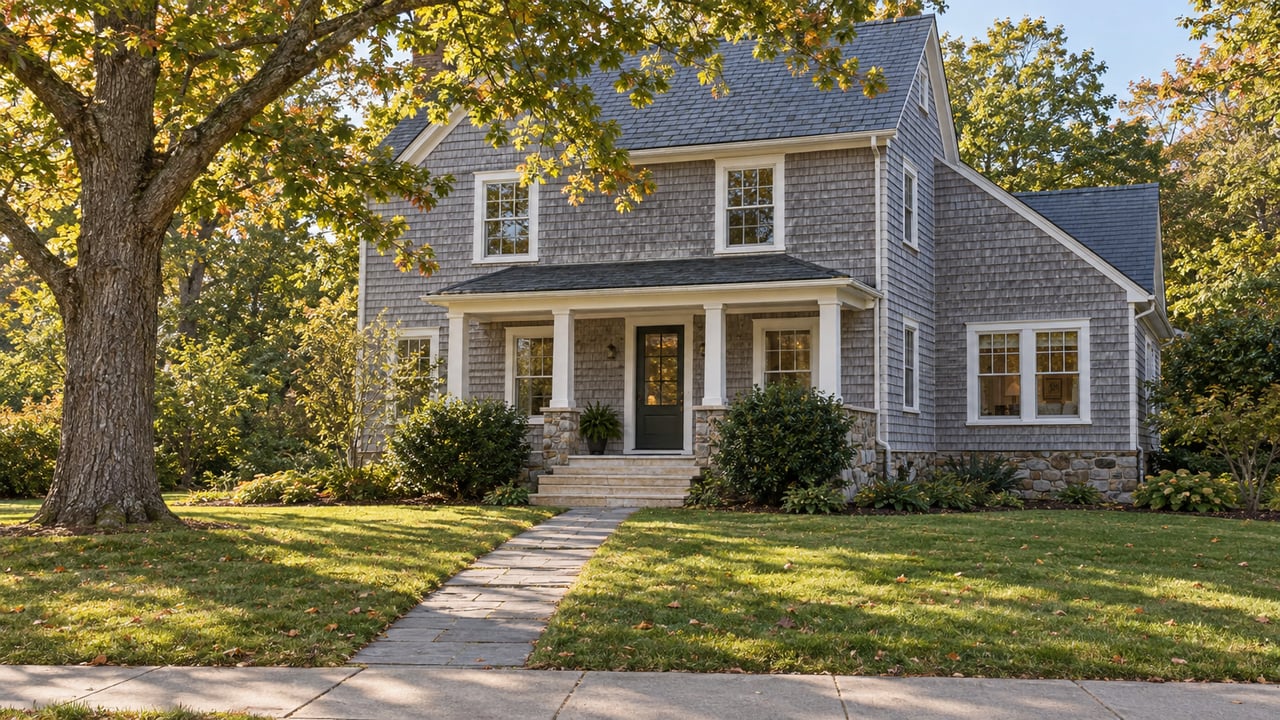
Pull two documents side by side sometime: the current property tax bill on a single-family home in New Rochelle, and the payment schedule the city's Industrial Development Agency negotiated for the 28-story tower a few blocks away. The homeowner's number has gone up every single year since at least 2018. The tower's number, for the next two or three decades, is locked at a fraction of what a comparable property would otherwise owe.
That gap is not a glitch in the system. It is the system, and it explains something that trips up a lot of buyers weighing New Rochelle against a village like Larchmont or Pelham: how a city can add thousands of new housing units downtown and still have its existing single-family market run tighter and pricier every year, while city officials describe the tax picture as stable.
The Discount Built Into Every Crane
New Rochelle's downtown has been rebuilt over the past decade through a financing tool called a PILOT, short for payment in lieu of taxes. A developer who wants to build a large residential project applies to the city's Industrial Development Agency for a package of incentives, most consequentially, a discount on the annual property tax bill.
According to a local watchdog publication, New RoAR News, the standard version of this deal shaves 50 to 70 percent off the annual property tax bill that would otherwise be levied to fund the city, county, school district and library. Instead of paying that full bill, the developer pays the discounted PILOT amount directly to the IDA, which distributes it to those same taxing bodies. The same analysis estimates that projects approved by the agency since 2017 total roughly $2.5 billion, and that the one-time tax subsidies attached to them add up to more than $100 million.
None of this is hidden. It shows up in public agenda packets every time the IDA board meets. What is easy to miss, if you are only looking at a listing price and a school district name, is how directly it shapes the market you are shopping in.
Four Deals That Show the Pattern
Recent IDA actions give a clear picture of how this plays out in practice.
| Project | Units | PILOT Term | Status |
|---|---|---|---|
| The Stella, 10 LeCount Place | 380 | 30 years | Completed |
| 438 Main Street | 115 (senior housing) | 30 years | Approved September 2025 |
| 466 Main Street | 489 | 25 years | Under IDA review as of June 2026 |
| 40 Memorial Highway | 588 (existing) | 15-year extension proposed | Extension pending |
The 466 Main Street numbers are the clearest illustration of the math, because the developer's own financial consultant laid them out in the June 2026 agenda packet. The parcel currently generates about $168,000 a year in property taxes. Once BRP Companies finishes the 489-unit tower, the site is projected to pay an average of roughly $1.26 million a year under its proposed 25-year PILOT, a 7.5 times increase over what it pays today. But that same $1.26 million represents only about 38 percent of what the property would owe at full assessed value. Separately, the agenda packet estimates that the city would forgo roughly $31 million in tax revenue over the 25-year term, in exchange for the housing and the smaller, immediate payment stream.
A community-run development tracker that compiles city and IDA filings puts The Stella's projected savings at roughly $12.6 million over its 30-year term, against a full tax liability estimated near $33 million. At 40 Memorial Highway, the developer is now asking to extend a PILOT that was already set to expire in 2034 by another 15 years, carrying discounted payments through 2049, in exchange for handing the city 80 parking spaces and setting aside 59 of the building's 588 units as affordable housing.
Each of these deals gets debated on its own merits at IDA meetings, usually framed around job creation, affordable units and downtown revitalization. Taken together, they mean a meaningful share of New Rochelle's newest, densest housing stock is contributing far less to the tax base, for far longer, than the house down the street from it.
Two True Stories, Told at Once
Here is where the picture gets genuinely interesting for a buyer trying to read New Rochelle correctly, because the city tells two versions of this story and both are accurate.
Former Mayor Noam Bramson, who led the city from 2006 to 2023, pointed to the results in an interview with the Pew Charitable Trusts: New Rochelle added housing at more than double the national rate between 2017 and 2021, and rents rose just 7 percent from 2017 to 2023 while rents nationally climbed 31 percent. He described property taxes as stabilized and running below the state's tax cap, crediting the added tax base, permit fees and one-time developer contributions for funding infrastructure and services the city could not otherwise afford.
The city's own published tax rate history tells the other half of the story. New Rochelle's municipal tax rate, the portion set entirely by the city and unaffected by county or school levies, has climbed every year on record:
| Year | City Tax Rate (per $1,000 assessed value) |
|---|---|
| 2018 | $229.68 |
| 2020 | $235.43 |
| 2022 | $248.11 |
| 2024 | $258.51 |
| 2026 | $269.70 |
That is a roughly 17 percent increase over eight years. The phrase "stabilized below the cap," as reported by the Pew Charitable Trusts, describes the rate of growth, not the absence of growth. Both things are true: New Rochelle has absorbed enormous housing growth without the runaway rent spikes seen nationally, and the owners of existing homes have watched their own tax bills rise every year while a growing share of the city's newest, largest buildings pay a discounted rate for decades.
What This Means If You're Comparing New Rochelle to Larchmont or Pelham
Villages like Larchmont and Pelham don't run a downtown high-rise pipeline or a PILOT program at anything close to this scale. Their tax base is almost entirely existing single-family homes, so there's no parallel mechanism quietly redistributing the load. In New Rochelle, the mechanism is doing real work in the background of every listing you look at.
It also helps explain why New Rochelle's single-family market has stayed as tight as it has despite years of downtown construction. The single-family market data from Westchester's MLS put the median sale price at $1,075,000 in February 2026, up 11.9 percent from a year earlier, with just 1.1 months of supply. Those thousands of new downtown units are almost entirely rental apartments and, more recently, condominiums, a separate submarket from the detached houses on streets like Weyman Avenue or Glenwood Lake. They haven't added competing single-family supply, and the zoning capacity that made them possible was capacity spent downtown rather than in the city's residential neighborhoods.
Pratt Landing Changes Who Gets to Ask the Question
Almost every project described above is a rental building. That changes with Pratt Landing, the 11.5-acre waterfront redevelopment the city approved in January 2025 at the former Echo Bay industrial site. Twining Properties is leading the project with Robert A.M. Stern Architects and EDI International on design, Langan Engineering, and Mathews Nielsen Landscape Architects on a planned "Living Shoreline" park along Long Island Sound. The plan calls for 383 rental apartments alongside 99 for-sale condominiums, a 150-room hotel, more than 40,000 square feet of retail, and the restoration of the historic New Rochelle Naval Armory into an event space and veterans center. Construction was slated to begin in 2026, with completion targeted for 2029.
Pratt Landing has not disclosed its own PILOT terms yet. But given that nearly every comparable downtown project of the past decade, from The Stella to 466 Main Street to 438 Main Street, has received one, it's a reasonable question to ask before those 99 condos come to market. A downtown condo built under a multi-decade PILOT could carry a meaningfully lower tax bill for years than a single-family home purchased the same year in New Rochelle or a neighboring village. It could also mean a future owner inherits a step-up in taxes when that PILOT eventually phases toward full assessment, a timeline worth understanding before signing anything.
None of this is a reason to avoid New Rochelle. It's a reason to ask more precise questions before you compare a listing price against a village home a few miles away. A tax bill is not a fixed fact about a property. In this city, it's a negotiated outcome, and knowing which side of that negotiation a given address sits on changes what the number actually tells you.
FAQ
Will Pratt Landing's 99 condos come with a tax abatement? The project hasn't disclosed PILOT terms as of this writing. Given the pattern set by other large downtown developments, buyers should ask the developer or their attorney directly about tax abatement status before signing a contract.
Does living in an older single-family home mean I'm subsidizing the new towers? Not directly, but the mechanism is real. PILOT payments fund city, county and school budgets at a discount relative to full assessment, and the city's own published rate table shows the municipal tax rate rising every year that these agreements have been in effect.
How can I check whether a specific property has a PILOT or tax exemption attached? IDA meeting agendas and resolutions are public and searchable through the City of New Rochelle's website. For any specific address, a real estate attorney or tax professional can confirm current exemption status before you make an offer.
Understanding a city's tax mechanics is part of understanding whether a home is priced fairly, and it's the kind of detail that only shows up when someone has spent real time in the local market rather than skimming a listing sheet. If you're comparing New Rochelle against Larchmont, Pelham or another Sound Shore village and want a clear-eyed read on what a specific property will actually cost you to own, Martha Rubio can walk through the numbers with you. Schedule a complimentary consultation to start the conversation.
This article is general information, not legal, tax or financial advice. Consult a qualified professional about your situation.