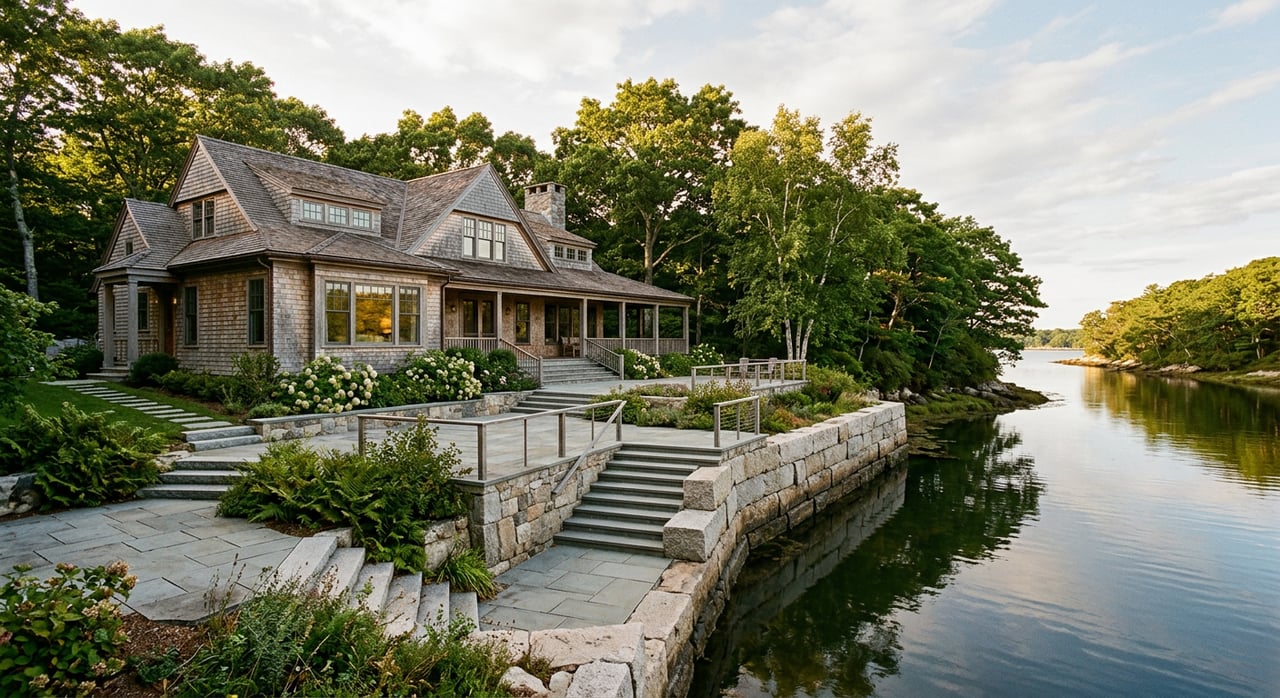
Salt air, sailboats in the harbor, and golden-hour light over the Sound. If you are picturing that from your own backyard in Larchmont, you are not alone. Waterfront here is special, but it also comes with rules, logistics, and long-term planning that smart buyers handle upfront. In this guide, you will learn how “waterfront” is defined locally, which permits and flood tools to check, how moorings and clubs actually work, and a clear due-diligence checklist to use before you tour. Let’s dive in.
What counts as waterfront
Not all “waterfront” is the same in Larchmont. Here is what you will see on the Sound Shore:
Waterfront or direct frontage. Parcels with physical frontage on Long Island Sound, a harbor basin, cove, or tidal stream. These may include a bulkhead, seawall, private pier or dock, or direct beach access. Docks, piers, bulkheads, and similar structures are treated as regulated “docking facilities,” which often require state or federal permits. Review New York’s Protection of Waters and tidal wetlands programs for what is covered by permit rules at the state level. You can scan the state overview of regulated work in and along waterways at the New York State Department of Environmental Conservation’s Protection of Waters page.
Mooring or slip access. Some homes include a deeded slip or mooring right, but many do not. In Larchmont and Mamaroneck, the municipal Harbor Master assigns moorings and seasonal facilities, and private clubs manage their own lists. Waiting lists, size limits, and transfer rules are common. Always verify in writing whether a parcel conveys a mooring or slip, or only nearby access. See how moorings and harbor facilities are administered by the local Harbor Master’s office for Mamaroneck and Larchmont harbors.
Water-view or water-adjacent. These homes are one or more streets back with views or short walks to beaches, promenades, or club facilities. They often carry a Sound Shore premium with fewer regulatory obligations than direct waterfront.
Larchmont Harbor has shoals, breakwaters, and marked channels that affect navigability and vessel draft. If boating is central to your lifestyle, preview local approach information in the NOAA Coast Pilot for this section of Long Island Sound.
Permits and approvals to verify
Shoreline work usually involves more than one agency. Missing a permit can derail a closing.
State permits. The NYSDEC regulates docks, piers, bulkheads, dredging, and work in tidal wetlands or coastal erosion areas. If a structure sits in or near a mapped tidal wetland, state review is likely. You can see the categories and enforcement overview on the DEC’s Protection of Waters page.
Federal permits. The U.S. Army Corps of Engineers oversees structures in navigable waters and dredge or fill work. Many projects need Corps authorization or may qualify under a Nationwide Permit with conditions.
Local harbor authority. The Village of Mamaroneck Harbor Master manages moorings, ramp permits, guest docks, and seasonal rules for Mamaroneck and Larchmont harbors. Confirm any mooring or slip status directly with this office.
Sea level planning. New York’s Community Risk and Resiliency Act and 6 NYCRR Part 490 set official sea level rise projections that state permits and funding must consider. If you plan long-lived shoreline investments like bulkheads or lifts, factor these projections into your plans.
Practical tip: Build a contract contingency that requires the seller to disclose dock or bulkhead permits and obtain written confirmation from the Harbor Master on mooring or slip transferability before closing.
Flood and long-term coastal risk
Coastal homes deserve a clear look at near-term flood risk and long-term exposure.
Check FEMA flood maps. Use the FEMA Flood Map Service Center to find your property’s official flood zone and Base Flood Elevation. This helps you understand lender requirements for flood insurance and design considerations.
Ask for an Elevation Certificate. An Elevation Certificate from a licensed surveyor, engineer, or architect can influence how insurers rate the home, especially in Special Flood Hazard Areas. If the seller has one, review it. If not, consider ordering one. Learn what the certificate documents and why it matters for insurance pricing.
Review sea level scenarios. For long holds and estate purchases, review mid-century and later scenarios in the NOAA Sea Level Rise Viewer and note New York’s Part 490 projections when planning shoreline improvements.
Local flood history. Ask the municipal planning or harbor office about dredging history, past flood claims in the basin, and whether the community participates in FEMA’s Community Rating System. Mamaroneck’s adopted Comprehensive Plan includes shoreline and harbor management policies that can inform expectations on public access, dredging, and resilience priorities.
Moorings, docks, and clubs
Your boating plan should be verified early, not after you go to contract.
Prove the access you expect. Clarify whether the listing includes a deeded dock, a recorded upland easement, a marina slip, or only the ability to apply for a municipal mooring. Many Sound Shore homes do not convey deeded slips. Confirm transferability, fees, and any membership requirements in writing through the Harbor Master or relevant club.
Harbor operations and seasonality. The local Harbor Master runs pump-out stations, guest docks, and seasonal ramps. Boating seasons and waitlists vary, so contact the office early if you expect to keep a boat.
Navigation depth and draft. Larchmont Harbor has shallow areas and specific approach channels. If you own a deep-keel vessel, confirm draft suitability and the need for possible dredging. Preview constraints in the NOAA Coast Pilot and follow up with the Harbor Master.
Clubs and beach access. Private clubs offer moorings, launches, dining, and junior sailing. Membership is typically required, and waiting periods can apply. If proximity to a club is a key driver, verify membership rules and guest privileges directly with the club.
Buyer due-diligence checklist
Use this list as a working file with your attorney, inspector, and agent. Request copies and confirm items in writing.
- Confirm the mapped flood zone and Base Flood Elevation on the FEMA Flood Map Service Center.
- Ask for past flood insurance policies, claims, and any Elevation Certificate. If none exist, budget for a new certificate. See what an Elevation Certificate covers.
- Have title search riparian rights, easements, and any recorded mooring or slip assignments. If submerged lands are referenced, a state lease or permit may be needed.
- Request copies of NYSDEC and any U.S. Army Corps authorizations for existing bulkheads, docks, or dredging. Treat undocumented structures as unpermitted until proven otherwise. Review NYSDEC’s permit categories and enforcement posture.
- Commission a structural and engineering review of any bulkhead, seawall, or dock. A coastal engineer or marine contractor can estimate remaining life and repair timelines. See New York’s Coastal Erosion Management program context for shoreline structures.
- Contact the Harbor Master to confirm mooring or slip status, transfer rules, waitlists, and seasonal operations for Mamaroneck and Larchmont harbors.
- Ask your lender whether flood insurance will be required based on the lender’s flood determination. Collect preliminary quotes from NFIP and private carriers and note whether an Elevation Certificate could improve pricing.
- Run the address through the NOAA Sea Level Rise Viewer and consider New York’s Part 490 projections for mid- and long-term planning.
- Review local plans that touch shoreline policy, dredging priorities, and public access. See Mamaroneck’s Comprehensive Plan for context.
- Visit in different seasons and after a storm if possible. Confirm haul-out and winter storage options and whether local marinas or ramps are seasonal.
Lifestyle and market snapshot
Larchmont sits on the Westchester Sound Shore with coves, a sheltered harbor, and access to parks and promenade areas. This is a high-end market where waterfront and water-view homes command strong interest. For commuting, Sound Shore communities offer regular Metro-North service on the New Haven Line, and local planning materials commonly note a roughly 30 to 40 minute express ride to Midtown. Amenities like Harbor Island Park, municipal facilities, and private clubs contribute to both lifestyle value and the need to understand harbor rules and membership policies.
Common red flags
- No permits for an existing dock or bulkhead, or evidence of past enforcement. NYSDEC can require removal or repairs and may levy fines.
- No proof of deeded mooring or slip rights. Informal use of a club or marina should not be relied on without written confirmation and transfer terms.
- Repeated flood or storm-damage claims. Ask for all prior insurance claims and review underwriting notes before you proceed.
- An aging seawall or bulkhead without a recent engineering report. Expect higher near-term costs and likely permits for repairs or reconstruction.
Ready to explore Larchmont waterfront with confidence? Let a local, concierge-level advisor coordinate the right inspections, permits, and harbor contacts so you can focus on lifestyle and long-term value. To start a tailored search or get a second opinion on a specific property, connect with Martha Rubio.
FAQs
What is considered true waterfront in Larchmont?
- True waterfront means direct frontage on Long Island Sound or a connected harbor, cove, or tidal stream, often with a bulkhead, seawall, dock, or beach access. These structures are typically regulated and may require permits from New York State and possibly federal authorities.
How do I verify that a dock or bulkhead is permitted?
- Ask the seller for copies of NYSDEC permits and any U.S. Army Corps authorizations, then cross-check with the DEC’s Protection of Waters program. Treat undocumented structures as unpermitted until verified in writing.
Do Larchmont homes usually include a mooring or slip?
- Many do not. The Village of Mamaroneck Harbor Master administers moorings and seasonal facilities for Mamaroneck and Larchmont harbors. Confirm assignment, transfer rules, and any waitlist with the Harbor Master before you go to contract.
Will my lender require flood insurance on a waterfront home?
- It depends on the property’s FEMA flood zone and Base Flood Elevation. Look up the address on the FEMA Flood Map Service Center and ask your lender for their determination. An Elevation Certificate can help insurers rate the risk more precisely.
How should I plan for future sea level rise on the Sound Shore?
- Review scenarios in the NOAA Sea Level Rise Viewer and consult New York’s Part 490 sea level projections. If you plan long-lived shoreline work like bulkheads or lifts, incorporate these projections into design and budgeting.
Who assigns moorings and what is the boating season like?
- The Village of Mamaroneck Harbor Master manages moorings, guest docks, and seasonal ramps for the local harbors. Contact the office early to understand availability, transfer policies, and seasonal schedules.
New York State DEC — Protection of Waters
Village of Mamaroneck — Harbor Master
NOAA Coast Pilot — Long Island Sound, Larchmont Harbor